
Goodnight Moon
Thoughts on memory


In the great green room there was a telephone, and a red balloon, and a picture of / the cow jumping over the moon.
I don’t have it in front of me, but I can see the cover as if it were. I’m not even sure if I’m remembering the words correctly, but they’re as true to me as anything I’ve ever known. The ambiguity makes their efficacy truer; in memory’s fallibility, I am able to appreciate more the whole.
I have read “Goodnight Moon” more times than probably any other book in my life, but it is weightless and ephemeral. It may not even exist. It is the song my daughter hums to herself as she dresses in the morning, the crude amalgam of every Taylor Swift, Olivia Rodrigo and, most recently, Carly Rae Jepson song I’ve been asked repeatedly to play for the past three years.
Last week, I finished “Middlemarch”, a nine-hundred-something page book whose characters I missed and yearned for when I was otherwise occupied. It was one of the best books I’ve ever read. But already, a week later, it is fading, Dorothea and Will a diffuse imprint I can only recall with effort. At least the impression will last.
My son is willful. He misbehaves and tests and prostrates and yells and generally doesn’t want to do what we ask. Approaching four, he is the sum of himself and us, but the percentages are not clear. In the moment, it is agonizing, and I find myself asking him “why” he does a thing moments after it is strewn over the floor, or as I’m dragging him towards an exit. The adult in me needs a reason as if, in the aftermath, it can justify the loop, the cycle of behavior and regret that feels, as it should, utterly one-sided. I do not resent his willfulness; I am proud of it, and in moments of expansiveness, embrace and cherish it. I just wish that I could abide it, that my adult need to abbreviate and control was not so pervasive. In the quiet moments, I have never loved anything so much as the absolute certainty of his rightness.
When I look at photos from last summer, from his infancy, I do not remember that person. I cast myself back like a flare and it briefly infuses me with warmth and solace but the days and weeks blur. There is an ongoing tragedy in memory. Will I emerge from this time, or will I be performing this same exercise in a decade, wondering how he was ever so small, so perfect, and me so deliriously grateful for all the trouble?
What’s making me happy this week
I’ve watched this Rosalìa performance from the BRIT awards at least a dozen times over the past couple of weeks. It’s the perfect summation of everything that’s great about gifted musicians performing live with talented backing dancers. Incredible.
Reading: Tomorrow is Yesterday by Hussein Agha and Robert Malley
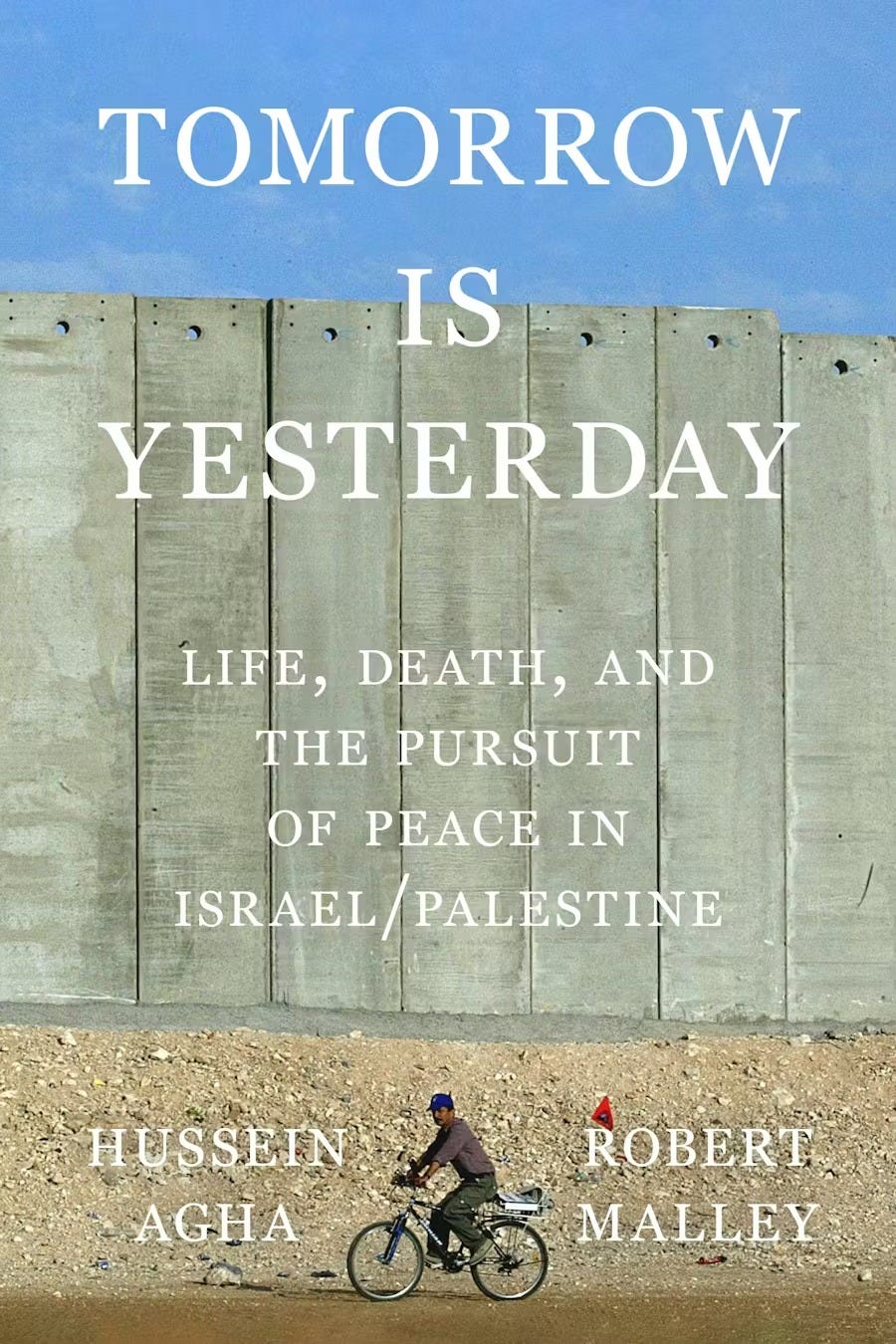
A book whose full title is “Tomorrow is Yesterday: Life, Death, and the Pursuit of Peace in Israel/Palestine” is certain not to be easy reading, but the two authors — well known for their diplomacy on the Palestinian and American sides, respectively, since the 90s — manage to rend a compelling through line across nearly 80 years of failure.
The book itself meanders and repeats itself ad nauseam, but its hypothesis boils down to a few things:
Israeli and Palestinian diplomacy was set up to fail from the very beginning.
The two-state solution was always a phantom and will be impossible to manifest.
The Americans were often the cause of the diplomatic failures and have, since Oslo in 1993, promoted a status quo between Israeli and Palestinian leaders that belies the progress many on both sides seek.
The book assumes the reader is steeped in at least the basic tenets of the conflict, and makes few introductions of the main characters, namely Arafat, Abbas, Netanyahu, Sharon, Olmert, Barak and a few others. Of October 7th they speak less about the event itself than its inevitability, and the resetting of relations (in very bad ways and, potentially, hopeful ones) that have since occurred.
This was the first time I’ve encountered a strong, convincing argument against a two-state solution; intuitively, it’s always seemed fundamentally flawed, but I resisted its rejection out of an obligation to historical precedent.
The book contains some incredibly moving sections, including primary sources that, shortly after the Nakba, acknowledged an inevitable future for both sides:
In April 1956, during the funeral of Ro’i Rothberg, an Israeli who had been ambushed by Palestinian infiltrators, Israel’s then– Chief of Staff Moshe Dayan said:
“Let us not cast the blame on the murderers today. Why should we declare their burning hatred for us? For eight years they have been sitting in the refugee camps in Gaza, and before their eyes we have been transforming the lands and the villages, where they and their fathers dwelt, into our estate… Beyond the furrow of the border, a sea of hatred and desire for revenge is swelling, awaiting the day when serenity will dull our path… The young [Ro’i] who left Tel Aviv to build his home at the gates of Gaza to be a wall for us was blinded by the light in his heart and he did not see the flash of the sword… The gates of Gaza weighed too heavily on his shoulders and overcame him.”
So how will the conflict end? How will the Palestinians find justice and restoration of their confiscated land? How will diaspora Jews feel safe in a world increasingly aghast at Israel’s warmongering? And will Israeli citizens ever reconcile their desire for peaceful coexistence with the destabilizing certainty that many of their neighbors are set against the country’s existence?
The book offers no easy answers, as of course there are none, but it treats this time as a new beginning, an opportunity to set aside preconceived notions of how Israel/Palestine relations are supposed to play out. The two sides need to begin to see themselves as people first, and acknowledge a shared humanity. That won’t happen anytime soon, but it’s the only means or long-term success there is.
Rating: ⚫️⚫️⚫️⚪️⚪️
Format: eBook
Watching: Train Dreams
My goodness, what a gorgeous film Train Dreams is, and perfect austerity porn for someone who craves such a life.
But Clint Bentley, who co-wrote one of my favorite movies in recent years, Sing Sing, shows himself a deft and careful director. Adapted from a novella by Denis Johnson, Train Dreams is the life story of Robert Grainier, who as an orphan ambles into the 20th century as a woodcutter and track layer in the Pacific Northwest. Meeting Gladys in his 20s, they build a little farmstead in northwest Idaho among the tall pines and redwoods and built a life with their young daughter, Katie.
The movie recounts Robert’s entire life, and I won’t spoil the major plot points but to say that everything that happens is treated respectfully and honestly and, above all, quietly. This is a Terrence Malick movie by another name, though less meandering and far less pretentious; it is about finding beauty and peace in all things and by all people, and Robert — played with grace by Joel Edgerton — is a man for all seasons.
There are two standout roles here: Gladys, played with joyful confidence by Felicity Jones; and Arn Peeples, an old-timer woodcutter/explosives expert played by William H. Macy.
(As an aside, I often think about how Macy evaded any responsibility in Felicity Huffman’s bribery scandal and subsequent incarceration. He was reportedly in the same room as Huffman during calls with the owner of a corrupt SAT test center and knew of the crimes. Why wasn’t he charged? Feels weird, man.)
I also want to shout out Will Patton, who does an incredible job as the film’s narrator. I usually hate narration in movies, but this film feels like a book in the best way, and the narrator felt inseparable from it.
Baking: Sally’s Chewy Chocolate Chip Cookies
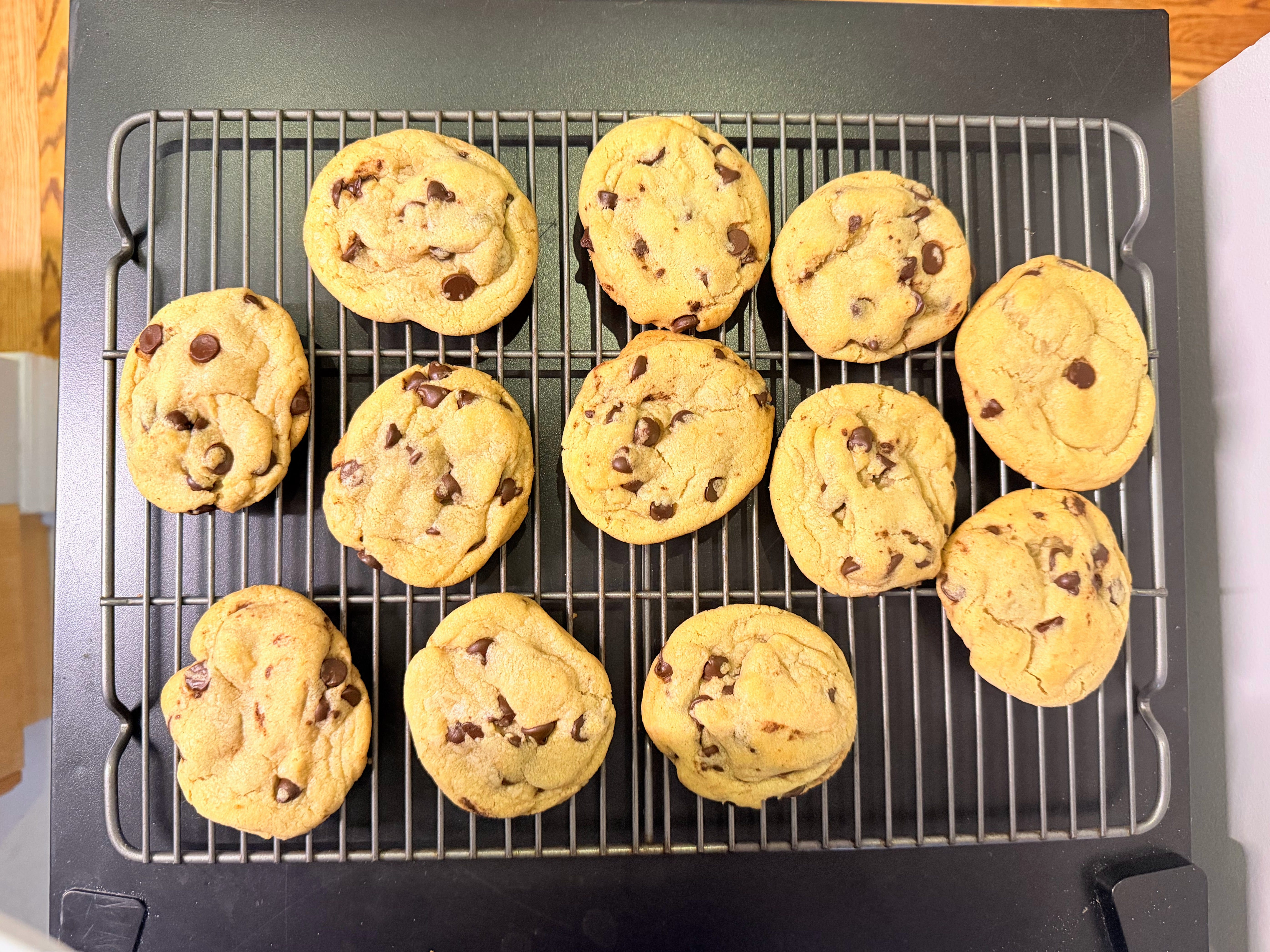
This terrible photo doesn’t do these chocolate chip cookies justice. I’ve baked this recipe several times over the past few months, and every time they evoke rapturous praise.
The key is to chill the dough before baking it so that they bake evenly and don’t “sweat” on the parchment paper prior to going in the oven. Plus, the addition of corn starch and an egg yolk make them both crunch and chewy. Just delightful.
3 Songs - March 24th, 2026
Spring is here
A tendril curving to the sun
Press your foot deeper into the mud
So that it may turn to clay
And I can return here
To recall that
Spring was here
Until next time — thanks for coming, it was so lovely to see you.
Love,
Daniel